Frequently Asked (Reindeer) Questions: What You Need to Know about Visiting a Local Reindeer Farm
A
visit to a local reindeer farm is one of the most memorable ways to learn about
northern life in Finnish Lapland. During a Beyond Arctic guided visit to a
local reindeer farm, you will not only meet the animals, but learn about the
traditions of reindeer herding, and enjoy a relaxed moment in a rural setting
outside the city.

Throughout the experience, a Beyond Arctic photography guide captures natural photos of the visit, so you can focus on the animals while still bringing home meaningful photos to remember this unique experience.
Many visitors arrive with plenty of questions about reindeer. Below are some of the most common ones — along with what you can expect during a guided farm visit.
What happens during a reindeer farm visit?
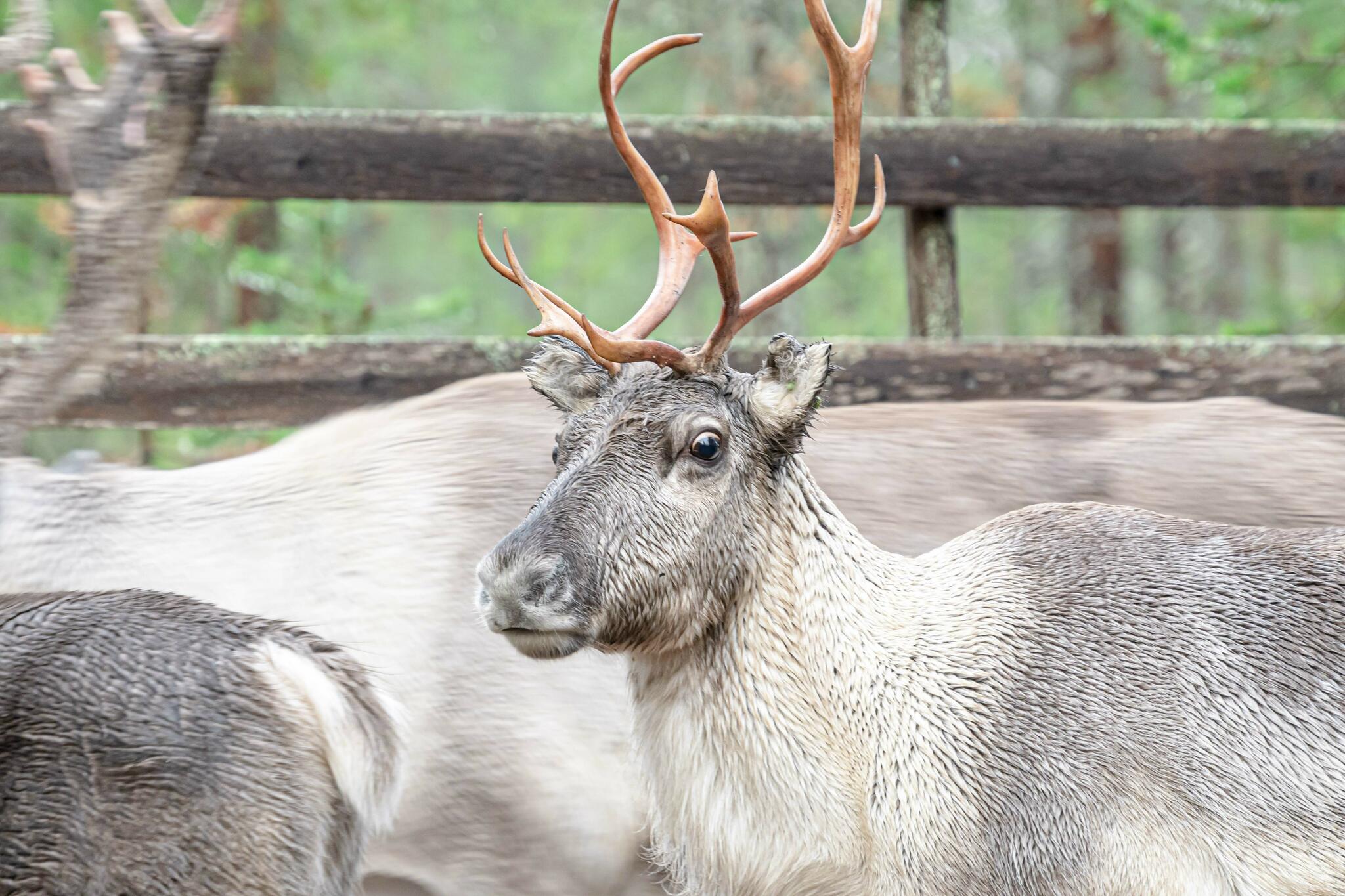
During a Beyond Arctic tour to a reindeer farm near Rovaniemi, you will get to spend time with local herders and the animals. The atmosphere is informal and welcoming, as the reindeer herders and guides greet us on arrival.
Your photography guide documents the visit, capturing candid moments of you meeting the animals, learning about herding culture, and enjoying the snowy surroundings. Because we focus on natural, documentary-style photography, the images reflect the genuine atmosphere of the visit rather than staged poses – but if you want, we are happy to do that as well together with our handsome animal models!
Meanwhile, the herders explain daily life with reindeer and answers questions about the animals, their behaviour, and the long traditions of reindeer herding in Lapland. After the ride we gather around a campfire to warm up and enjoy a hot drink and a snack.

Why do reindeer have antlers, and do they grow back?
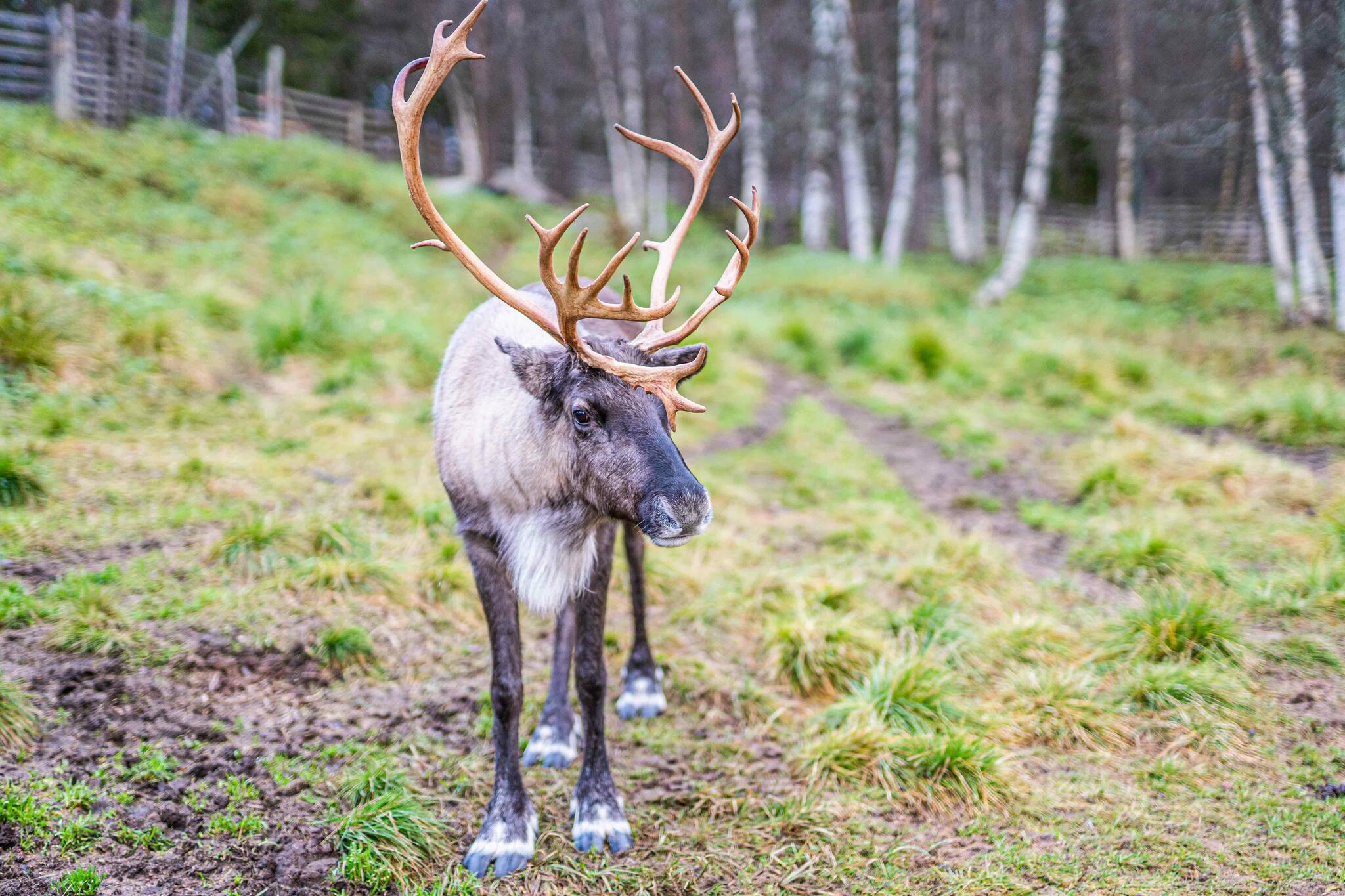
One of the first things visitors notice about reindeer is their antlers. Unlike horns (which are usually permanent), antlers are solid bone structures that grow, fall off, and regrow every year.
During summer, reindeer antlers grow remarkably quickly — sometimes up to two centimetres per day. They are covered in soft skin called velvet while growing. As the antlers harden, reindeer rub them against trees to remove this skin. This usually happens in August to October.
Antlers also play an
important role within the herd. They help determine social position, and males
use them when competing for females during the autumn mating season. Younger
reindeer typically grow larger antlers each year until they reach maturity at
roughly the age of 7 years old.

What do reindeer do during the summer?
Although many visitors see reindeer in winter, their yearly cycle actually begins in early summer with the arrival of baby reindeer.
At that time, reindeer roam freely across large grazing areas, feeding on natural vegetation. Their winter coats shed, and new antlers grow rapidly. The animals spend much of the summer moving through forests, wetlands, and open fells.
One challenge during summer is insects. Swarms of mosquitoes and other biting insects — known locally as räkkä — can be intense. To escape them, reindeer gather in larger groups and move toward windy fells or open wetlands where insects are less active. In Rovaniemi, reindeer are known to even wander down to the beach by the river, competing for space with swimmers and sunbathers!
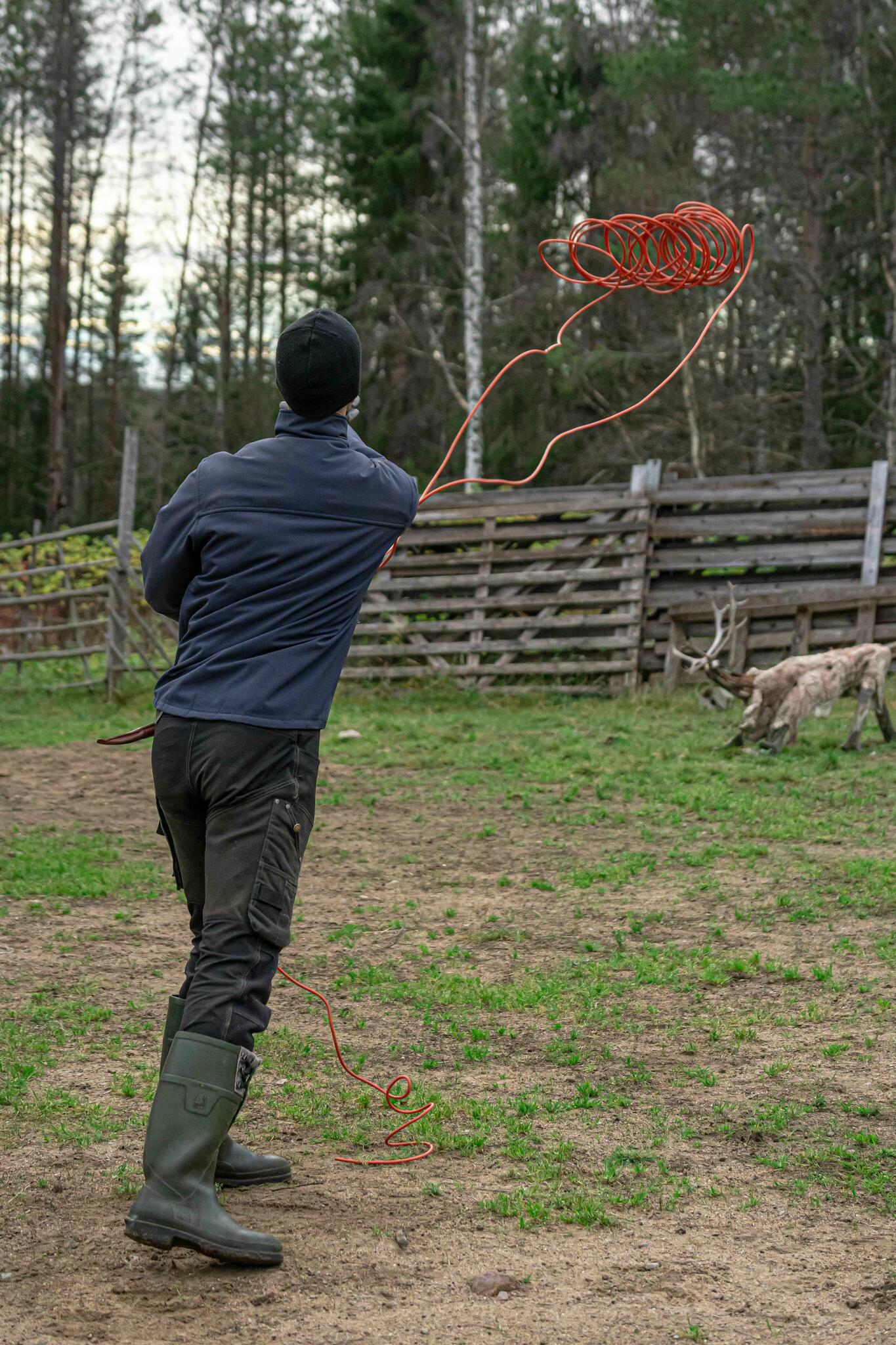
Herders take advantage of this natural behaviour to gather animals for the annual calf earmarking. Using different methods depending on terrain — sometimes on foot, sometimes with ATVs, snowmobiles, or even helicopters and, these days, drones — herders guide the animals into enclosures where calves receive their unique earmarks.
How do reindeer survive the winter?
Winter in Lapland can be long and cold, yet reindeer are well adapted to these conditions.
Their winter fur is extremely dense, helping them stay warm even in freezing temperatures. When strong winds blow, reindeer often turn their backs to the wind to protect their heads, where the fur is thinner.
Food can also be difficult to reach in winter. Reindeer can dig through more than a metre of snow to find lichens and other plants beneath the surface. Their diet includes hundreds of plant species throughout the year.
Still, winter can be challenging. Wild reindeer may lose up to 20 percent of their body weight compared to autumn. For this reason, herders sometimes provide additional food during the coldest months.

Is reindeer herding still an important livelihood?
Yes. Reindeer herding remains a central part of northern culture and rural livelihoods in Lapland.
Herders often work together in communities called cooperatives, where families manage and care for large, shared herds. Depending on local conditions, some reindeer roam freely year-round while others are gathered into enclosures during winter.
Tourism has also become an important part of the modern reindeer economy. Farm visits give travellers an opportunity to learn about the animals while providing additional income for herders. Many reindeer owners also produce handicrafts, souvenirs, or materials related to traditional craftmaking.
Reindeer meat is widely used in northern cuisine, and local restaurants often feature dishes made from it.
Do reindeer have their own language?
Reindeer herding has developed its own specialised vocabulary over generations. Many words describe specific ages, colours, or roles within the herd.
For example:
- Hirvas refers to an adult male reindeer over three years old.
- Vaadin describes a mature female.
- Härkä means a castrated male.
- Tokka refers to a large herd of reindeer.
- Nulppo means a reindeer with no antlers.
There are also words for particular appearances or even ages, such as valkko for a white reindeer or musikki for a dark-coloured one, or nimiloppu (literally no name any more) to refer to a 7-year old reindeer (or older). These terms help herders identify animals and communicate clearly when working with large herds. There are lots of other words used to describe the reindeer, and most are not understood by non-herders – it is like a language of its own!

Why should you visit a local reindeer farm with Beyond Arctic?
For many travellers, meeting reindeer up close brings a deeper understanding of life in the north. These animals are not only symbols of Lapland but also part of a living tradition that connects people, landscapes, and seasonal rhythms.
A Beyond Arctic guided visit adds another layer to the experience. While the herder shares knowledge about the animals, the photography guide captures the visit. The result is both an educational experience and a personal memory of Lapland’s most familiar animal, preserved in photographs you can take home. Book your visit here!
Do you have more questions? Contact us! Our team of Arctic experts are here to help tailor a plan for your visit by phone or WhatsApp (+358 50 323 1090) or email (contact@beyondarctic.com)
Follow us on Instagram (@beyondarctic) and TikTok (@beyondarctic) for more content.